

Hey friends,
We (I…😅) did not send out an August issue, so this one covers the last six weeks. Which, incidentally, have been quite busy. Here is what we have in store for you today:
Valar Atomics closed a $1 billion round led by Sequoia
Portal Space bought an entire Falcon 9 and is reselling the spare capacity into the launch shortage that runs past 2028
Radical AI moved into a brand-new headquarters at the Brooklyn Navy Yard to build a world-class materials science lab
Avatar Robotics announced a $6.5 million seed round (which we were very excited to lead).
DTNY 2027: Save the Date for April 15, 2027!
We’ve also got Abe arguing why doomers are wrong, the latest episode of The Long Frontier on silicon photonics, our ever-expanding job board, and much more!
~Brannon
Feature: The Case for Anti-Doomerism
A must-listen from Abe and his conversation with Morgan Barrett. Watch the clip here!

Last Saturday, Dario Amodei published “We Must Pace the Frontier.” Sam Altman and Elon Musk backed its first step within hours, and the administration pushed back.
The doom narrative had already reached Labor Day cookouts the weekend before, the essay just put a name on it.
Morgan Barrett pulled Abe onto his show for what he called an “emergency anti-doomerism meeting.” I’m not going to give away the whole five minutes, because the clip is better than any summary of it, but here is the shape of Abe’s argument.
“If every generation of humans has had a similar set of fears around every new type of technology, what makes you think that this time actually is different?”
Morgan closes with a line making the rounds this week, imagine George Washington asking Americans to pace their experiments with freedom, and Abe’s answer to it is the best twenty seconds of the clip. Go watch. Dario’s essay is in Further Reading below if you want both sides.
The Long Frontier — New Photonics Episode!!
Watch on YouTube | Listen on Spotify | Listen on Apple Podcasts

Abe and I sat down with Dr. Marco Fiorentino, Director of the Large-Scale Integrated Photonics Lab at HPE Labs, for an episode on silicon photonics: why light already carries the internet, why AI is pulling optics inside the data center and toward the chip, and what it will take to do computation with light rather than just communication.
Marco has spent more than two decades on this problem, with a PhD in physics and doctoral work in quantum optics, and he explains it the way you’d want a lab director to. Trust me, the full episode is worth your time.
The Long Frontier is our conversation series on the technologies that will define the next fifty years.
AlleyCorp Portfolio Updates
Valar Atomics — $1 Billion Series B Led by Sequoia

The Raise: On August 3, Valar Atomics announced $1 billion in equity led by Sequoia, with Shaun Maguire joining the board, plus a $200 million credit facility from Erebor and other banks. Bloomberg put the valuation at $6 billion. The round also included Valor Equity Partners, Atreides, Point72, Riot Ventures and HOF Capital, among others.
Why Now: In June, Ward 250 powered an Nvidia Blackwell system, and Valar signed a deal with Nvidia to develop a waterless 30 MW AI factory. The company’s own framing is about learning rate: the NOVA core took two years, Ward 250 went critical in seven months, and the point of this capital is to shorten that cycle again and start manufacturing fleets of reactors instead of one-offs.
Our Take: Whichever way the AI model race breaks, power is the constraint that holds. If open models win, cheap inference explodes token volume. If closed models win, megaclusters stay gated by power. Even a capex pause cuts power last. That is the bet behind Valar, and this round is a large vote for it.
Read Valar’s announcement: Announcing our $1B Series B.
Portal Space- You Need Launch? Portal Will Launch You.
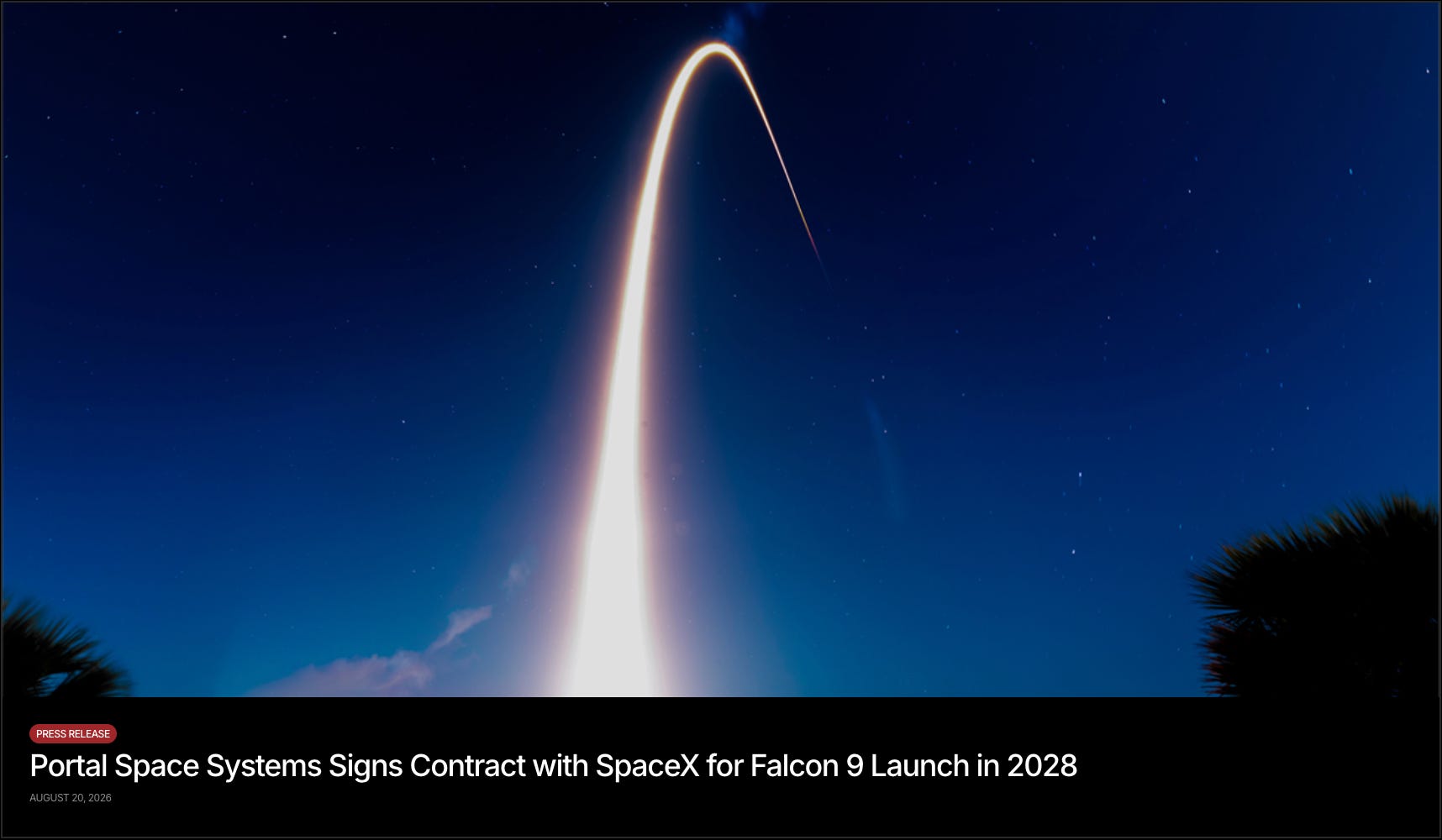
The Launch: On August 20, Portal Space Systems announced it has contracted an entire SpaceX Falcon 9 for its Motus Via Sol mission in 2028. The mission carries the first Supernova spacecraft, the in-space debut of Portal’s FLARE solar thermal propulsion (up to 6 km/s of delta-v), flying alongside multiple Starburst vehicles.
The Rideshare: Portal expects to use about half the fairing. It partnered with Maverick Space Systems to sell the rest, from ESPA-class through “cake-topper” slots, and on September 14 Maverick booked 10 Kepler Communications Tranche-2 satellites (400 kg class) onto the mission. A half-cake-topper slot is still open (email us directly if interested). Because Starburst and Supernova maneuver well beyond the drop-off orbit, the mission is less constrained by where rideshare customers need to go.
The Framing: From Portal’s founder and CEO Jeff Thornburg: “This is bigger than one rocket. We’re not just building assured access to orbit. We’re building assured access to any orbit, on any vehicle that can get our customers where they need to operate.”
Read more: Portal’s announcement and the Kepler booking.
Radical AI — First Day at the Brooklyn Navy Yard
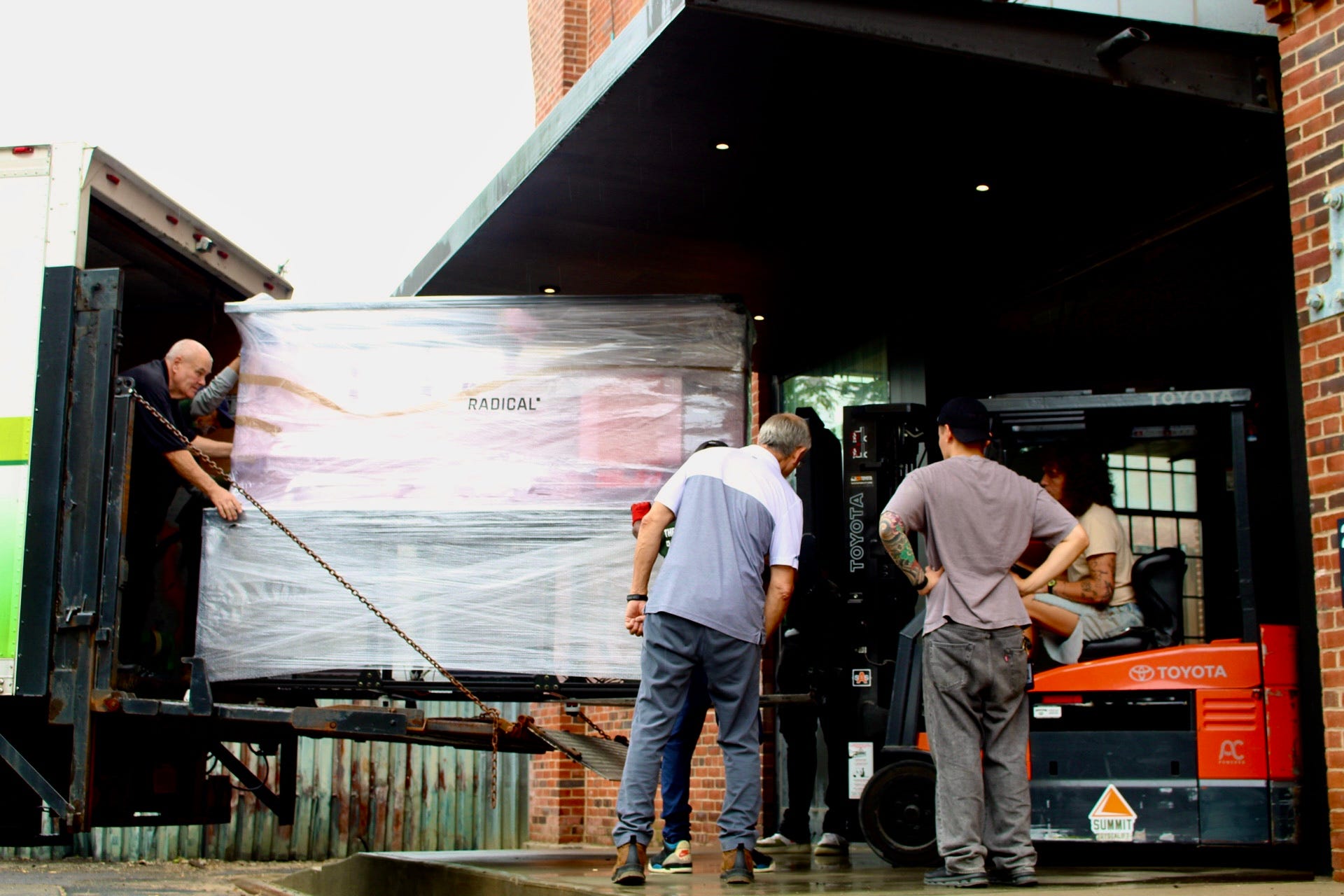
The Move: Radical AI started work this week at its new headquarters in Building 20 of the Brooklyn Navy Yard, and the equipment is rolling in for what founder & CEO Joseph Krause calls the company’s “largest self-driving materials lab to-date.”
The Lab: The buildout announced in January is a $4 million facility designed to run roughly 100 AI-driven experiments a day, with the robotics, gas lines and safety systems to match, and 115 new jobs in materials science, AI and engineering! Radical screens billions of candidate compositions in silico, synthesizes and tests the best of them in the autonomous lab, and feeds the results back into the models.
Why It Matters: A world-class materials lab is going up in New York City, run by an AlleyCorp company that is a DOE partner in the Genesis Mission and holds an AFWERX contract to develop high-entropy alloys for hypersonic flight. The Navy Yard is also a few minutes from where DTNY happens, which is not a coincidence about where deep tech in this city is concentrating.
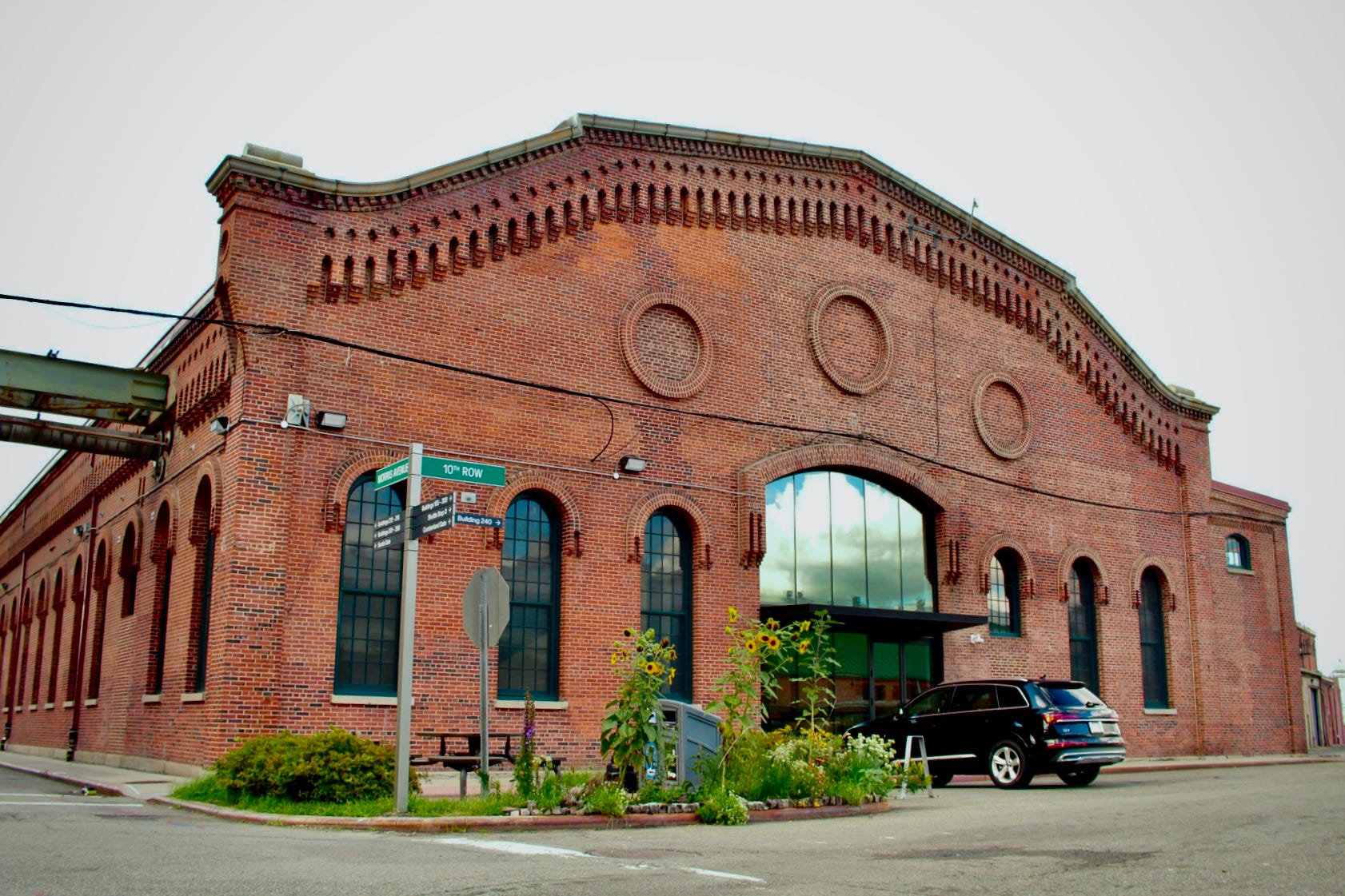
See the photos: Joseph’s post.
Avatar Robotics — $6.5M Seed Led by AlleyCorp
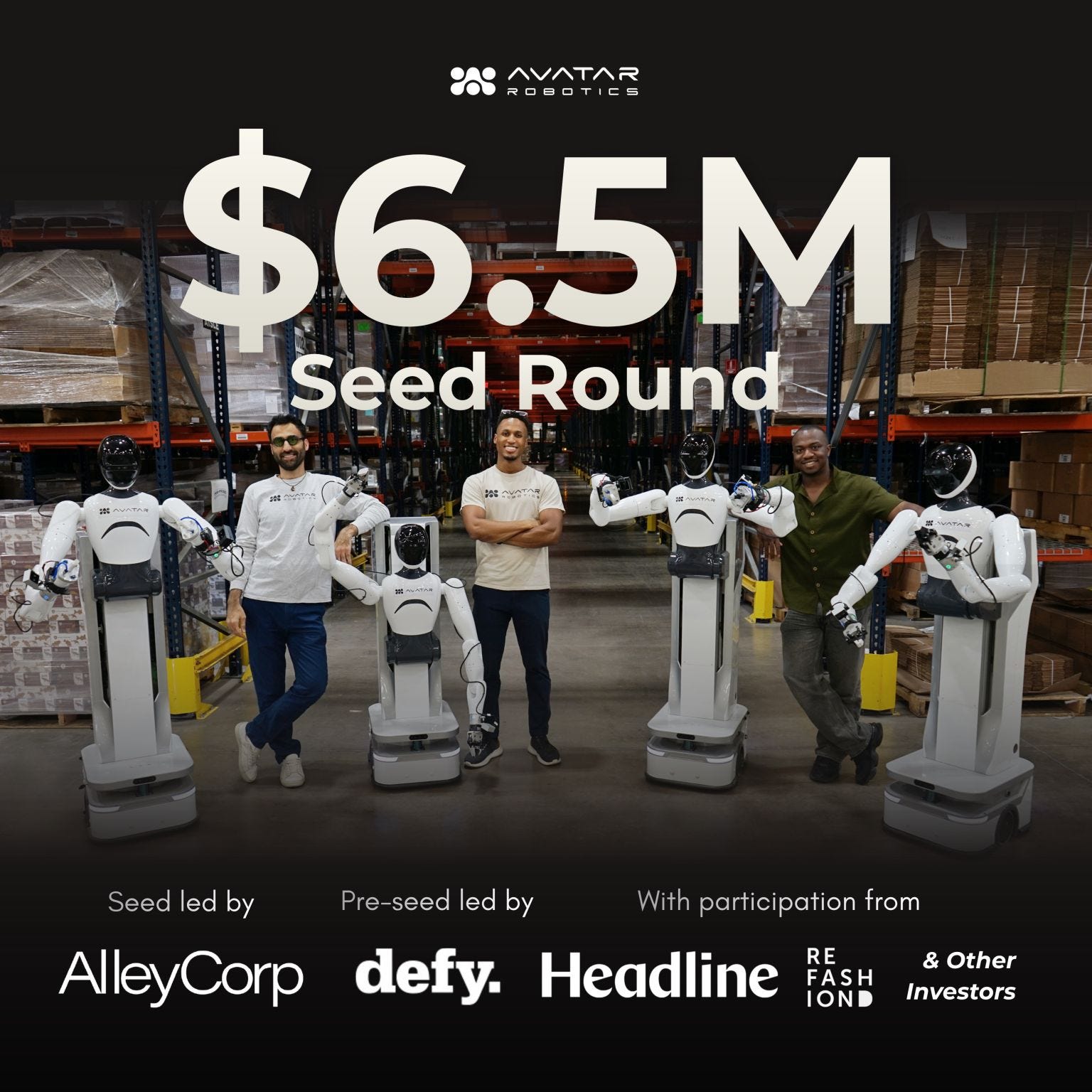
The Raise: On August 5, Avatar Robotics announced a $6.5 million seed led by AlleyCorp, alongside a pre-seed led by defy.vc, with Headline, Henry Ford III, Refashiond and others participating. Business Insider had the exclusive.
The Model: Avatar puts wheeled, two-armed robots to work in warehouses today, teleoperated through VR headsets by remote operators, and charges a recurring fee below the cost of hiring directly. Since launching in December, the robots have packed and sorted nearly 1 million items across live customer sites, including for a large global beauty retailer. Every shift generates the robot-control data the industry lacks, which Avatar uses to move more of the work to autonomy over time.
Why We Led: Avatar stood out to us because it delivers useful work before autonomy arrives, and the training data comes out of paying deployments rather than staged collection. As I put it to Business Insider: “Nobody was doing it in a way that was technically viable, novel, and scalable at the same time.”
The Data Question: From Founder & CEO Colin Webb: “Is it better to strap sensors to people and pay them to collect data all over the world, or is it better to have those people do direct work that is valuable immediately? The latter seems like the more valuable path.”
Read the story: Business Insider.
Deep Tech New York: Save the Date for 2027!

We officially announced our date for the second-annual DTNY taking place on April 15, 2027 at Newlab in the Brooklyn Navy Yard. The save-the-date and sponsorship links are on the site. We are assembling the speaker lineup now, so if you have a great speaker in mind, reach out to us.
Deep Tech News We’re Following
What we’re seeing: Since August, the money for hard tech has started coming from more than just venture funds. Banks, asset managers, private credit and the federal government anchored the largest defense, energy and compute rounds, and Sequoia and a16z raised dedicated hardware vehicles to stay in the game.
Physical constraints replaced the chip as the bottleneck: memory, power, siting and interconnect are where the early-stage checks and the early exits landed. The first public prices for embodied AI arrived and were promptly repriced. The buildout is being financed faster than it is being proven. Here are the eleven stories behind that read.
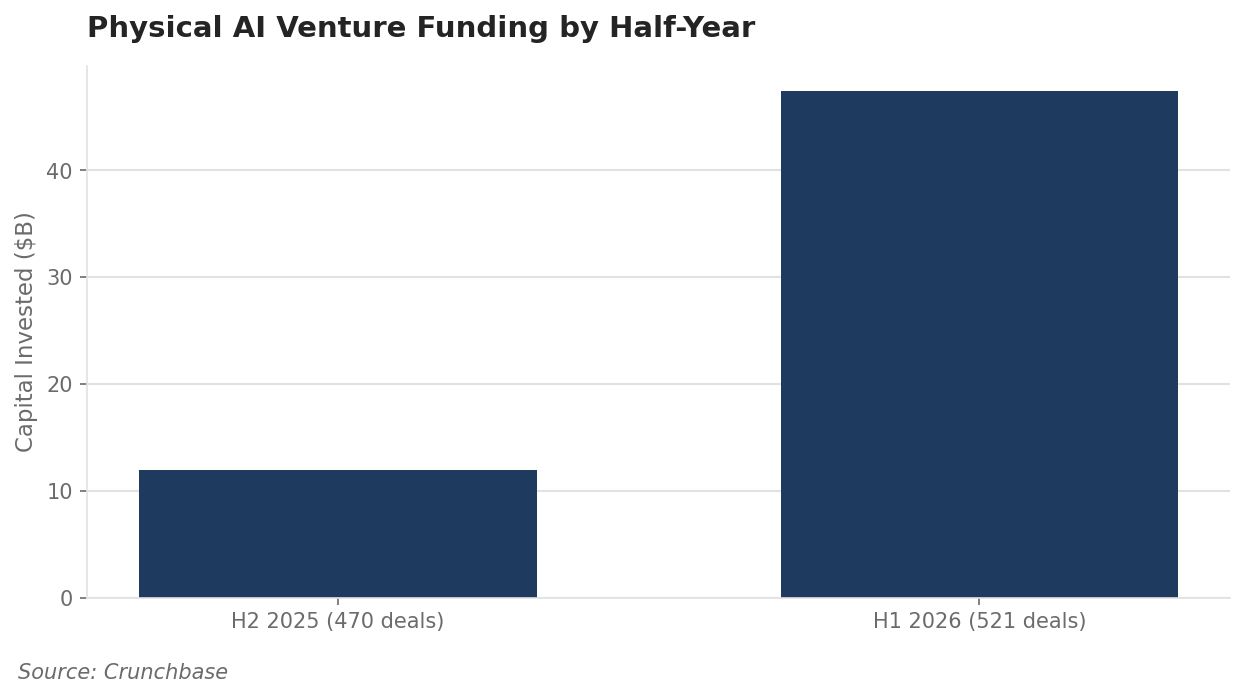
Source: Crunchbase. Physical AI raised $47.4B across 521 deals in H1 2026 versus $12B across 470 deals in H2 2025. Four rounds (Waymo, Anduril, Shield AI, Saronic) accounted for 52% of the half’s dollars.
1. Defense manufacturing became a bank-financed asset class. Hadrian raised a $1.37 billion Series D on August 6 (Bloomberg: $7.87 billion valuation) with JPMorganChase’s Strategic Investment Group as anchor co-lead, to build four facilities totaling just under 3 million square feet. Two weeks later Castelion raised $1 billion, $800 million of equity plus a $250 million revolver, at $13 billion on more than $500 million of military contracts, and Raytheon took a seven-year, $22.9 billion Tomahawk contract targeting more than 1,000 missiles a year versus 60 today. Our read: dual-use companies are now priced on whether the government has publicly said it wants the product and whether this company can become the one it buys from. The risk is the government saying it wants a lot and buying a little, so we prefer companies with a second type of customer. Hadrian · Castelion
2. The biggest software-native firms raised dedicated hard-tech capital. Sequoia closed a previously unreported $10 billion across its growth funds and is pointing it at reindustrialization and hardware, and a16z launched a $1.1 billion “Machine Age” fund for chips, memory, data centers and robots. Branded first-check hardware capital now exists at the largest generalist firms, which changes founder leverage at seed. The caveat is the concentration in the chart above: half the category’s dollars went to four companies. Bloomberg · TechCrunch
3. AI compute became a financed asset class. Nvidia signed MOUs with Apollo, BlackRock, Blackstone, Brookfield, Goldman Sachs and KKR to stand up compute-financing platforms meant to mobilize more than $500 billion of third-party capital, with no Nvidia capital commitment disclosed. SB Energy’s S-1 shows roughly $439 billion of backlog against six-month revenue of $138.7 million and a $3.2 billion net loss, with Nvidia guaranteeing residual value on about 4.25 GW-IT. The buildout is now private credit and infrastructure equity with vendor backstops, and the question we keep asking is whether this looks like the 1990s fiber buildout or toll roads, and who eats the stranded-asset risk. Nvidia · SB Energy S-1
4. Texas gated its interconnection queue, and other states followed. Governor Abbott directed PUCT and ERCOT to audit every data center in the queue (roughly 474 GW of requests, about 90% data centers) before any project moves forward, and BloombergNEF put about 20% of the entire US data-center pipeline at risk of delay. Pennsylvania pulled every data center above 25 MW out of fast-track permitting, Oregon froze state land sales for data centers, and Scotland froze approvals above 50 MW. Siting and power, not silicon, are now the schedule risk, and it is bipartisan and state-level, so it will not resolve in six months. Office of the Governor
5. Section 232 drone tariffs took effect September 3. 100% on drones over 25 kg, any drone with thermal imaging, and critical components including motors, speed controllers and lithium-ion batteries; 25% on smaller drones and other components; lower rates for allies, a deferral to February 2027 for Blue UAS-listed companies, and duty-free imports while a US facility is under construction. This is policy that moves founder unit economics directly, and whether it is protection or a cost shock depends on two discretionary mechanisms that haven’t been used yet. White House fact sheet
6. Humanoids got a public price and were promptly repriced. Unitree opened its Shanghai debut up 629% on August 19 and had given back about 53% by September 9, still at roughly 125 times 2025 revenue. Agility’s S-4 disclosed $1.8 million of 2025 sales against a $140 million operating loss ahead of a $2.5 billion SPAC. Our frame: the “brains” (Physical Intelligence, Skild, Generalist) are priced on promise at software multiples with few paid deployments, the “bodies” (Agility, Locus, Path) have real revenue but low value per robot, and nobody is winning yet. Every private humanoid mark now has a public P&L to be compared to. SCMP · The Robot Report
7. Memory became the binding constraint on AI compute. Nvidia’s supplier purchase commitments jumped to $279 billion from $119 billion, about $160 billion of it memory, and system prices were reported up more than 15% on memory costs. The supply response is multi-year: SK hynix approved two new fabs, SpaceX and Tesla committed $16.8 billion to the first phase of Terafab, and Micron is building a $10 billion Boise campus. The cost of compute is rising through memory, not logic, which reprices every inference-hardware thesis and opens room for memory-adjacent startups. Tom’s Hardware
8. The bottleneck moved out of the chip and the money followed. Lumilens emerged with more than $900 million raised at a $5.51 billion valuation, already shipping to a hyperscaler, two days after Reuters reported the administration is drafting a ban on Chinese optical transceivers. Then the wave: Point2, Celero, Ayar Labs, Cornelis and Lightmatter’s 19-company OCP workstream on co-packaged optics, plus two power-delivery exits (Flex buying EPC Power for $4.4 billion, Navitas buying Claros five months after its seed). This is where early-stage hardware checks and early exits actually cleared in the window, and it is the exact terrain of this month’s podcast episode. Lumilens · Reuters
9. Energy hardware took the biggest checks and the sharpest repricing. Valar’s $1 billion (above) and Base Power’s $1 billion Series D landed the same day, while Form Energy raised a $750 million Series G with backlog up from roughly 20 GWh to 80 GWh, reportedly at a lower valuation than its 2024 round. The government showed up as customer and lender: the Army awarded up to $2.2 billion across five microreactor developers, requiring an operating reactor by September 2028, and DOE closed a $1.9 billion loan to restart Duane Arnold. Power is being financed by every pool at once, and Form’s markdown is the reminder that hardware with a real backlog can still be repriced by market structure. Form Energy · U.S. Army
10. Space went on a war footing and a funding tear. NSPM-17 targets more than 1,000 launches and reentries on American soil a year by 2030, Payload reports the FY27 Space Force request at $71.3 billion (up 120%), and the Air Force Secretary said the US now has space control weapons on orbit. Capital followed: Stoke Space $1 billion, K2 Space $500 million at $6.8 billion, Impulse $308 million, Muon $250 million, and SpaceX’s $100 billion Louisiana spaceport, with Hughes’s Chapter 11 as the counter-signal. Launch and in-space mobility now clear $1 billion rounds on durable government demand, which is exactly the market Portal’s Falcon 9 move is built for. White House fact sheet · Payload
11. Uranium from seawater. Fluxnium raised a $7 million seed led by Congruent Ventures, with Constellation Energy participating, to pull uranium from seawater on reusable polymer fibers licensed from DOE; the ocean holds roughly 4 billion metric tons of it. Item 9 is the demand side of nuclear. This is the fuel side, at seed, with the operator of the largest US nuclear fleet on the cap table. TechCrunch
Further Reading
The essay behind this month’s feature. Dario Amodei’s “We Must Pace the Frontier,” the argument for slowing capability growth, with a three-part plan and one unilateral commitment. Read it alongside Abe’s case above and decide for yourself. darioamodei.com
IPOs are… optional? Nvidia confirmed its acquisition of Hugging Face at $12.93 billion, its largest ever, and PitchBook argued that AI exits are increasingly routing through corporate balance sheets rather than public markets. Worth reading for what it implies about how the next decade of deep tech exits will actually clear. PitchBook
Deep Tech Job Board
The job board is a running list of open roles at deep tech companies in and around the portfolio. If a role catches your eye, reach out and we’ll make the introduction. Where a listing is linked, you can apply directly.
Valar Atomics | Torrance, CA & Orangeville, UT — Advanced nuclear reactors and TRISO fuel:
Director of ModSim — Torrance
Lead Electrical Engineer — Torrance; $196k-240k plus equity
Staff Instrumentation & Controls Engineer - Nuclear — Torrance
Turbomachinery Aerodynamics Engineer — Torrance
Chemical Vapor Deposition Engineer (TRISO) — Orangeville, UT; the fuel side of the business
Plant Operator — Orangeville, UT
EnCharge AI | Santa Clara, CA — Analog in-memory AI compute chips:
Senior NPU Architect — US or Canada, remote-friendly
Staff Physical Design Engineer — US or Canada, remote-friendly
AI Compiler Engineer — US, Canada or Germany, remote-friendly
Lead DFT Engineer — US or Canada
Principal Solutions Engineer — US, remote-friendly
Technical Program Manager - Embedded Software — US, remote-friendly
Portal Space Systems | Bothell, WA — Rapidly maneuverable spacecraft and solar thermal propulsion:
Head of Electrical & Avionics Engineering — Lead the avionics org for Starburst and Supernova
Senior Satellite Guidance, Navigation, and Control (GNC) Engineer
Senior Electrical Engineer - Spacecraft Power Systems & Bus Architecture
Cargo Robotics | Palo Alto, CA — Last-mile delivery robotics:
Halo Braid | Cambridge, MA & Bristol, UK — Robotics for textured hair:
Principal Mechanical Engineer / Systems Engineer — Cambridge, MA
Senior Robotics Engineer — Cambridge, MA
Senior Robotics Engineer — Bristol, UK
Senior Mechanical Design Engineer — Bristol, UK
Senior Mechanical Engineer — Cambridge, MA
Mechanical Design Engineer — Boston, MA
Avatar Robotics | San Francisco, CA — Teleoperated robot workforce for warehouses and factories:
Root Access | New York, NY — Modern Manufacturer for critical electronics:
Radical AI | Brooklyn, NY — Autonomous materials science labs (see above):
Thanks for reading, and as always, if you’re building in deep tech (inlcuding software for hardware), we want to meet you. You won’t hear from me next month, as I’ll be out on pat leave (!!), but you will be in good hands with Abe, and I will be back with you soon. Keep building! 🚀
— Brannon | AlleyCorp Deep Tech